If you kept your old CD collection, those jewel cases may be useful again. Compact discs are gaining buyers at a faster rate than vinyl in 2026, while audio companies are releasing portable players that combine familiar disc playback with USB-C charging, Bluetooth and modern headphone connections. The return does not mean streaming has lost its dominance. Global on-demand audio streams grew 9.8% during the first half of 2026. CDs now serve a different purpose: they give you a physical copy, album artwork and a collection that cannot disappear when a streaming license changes.
CD Sales Are Growing Faster Than Vinyl
U.S. CD sales increased 16% during the first half of 2026, reaching 16.3 million units, according to Luminate. Vinyl sales still reached a larger total, but their growth slowed to 2.4% over the same period. Even after removing K-pop purchases, CD sales remained 6.7% higher than a year earlier.
K-pop has played a large role in the increase. Albums from major groups often arrive in several editions with photo books, cards, posters and retailer-exclusive items. Buyers may purchase the disc as part of a larger collector package, whether or not they regularly play it. That collector culture has also changed where people buy physical music. Mass-market retailers such as Target and Walmart accounted for nearly 30% of physical music sales during the first half of 2026, helped by exclusive K-pop editions and other artist merchandise.
CDs also have a basic advantage over vinyl: price. A new CD usually costs less than a new record, occupies less shelf space and does not require careful stylus setup. You can play the same disc hundreds of times without the gradual surface wear associated with vinyl.
Ownership adds another reason to return. A streaming service can replace a recording, remove an album, or change its catalog. Your CD remains the same version you purchased. You can also copy, or rip, its tracks to a computer for personal listening while keeping the original disc.
Portable CD Players Have Modern Features Now
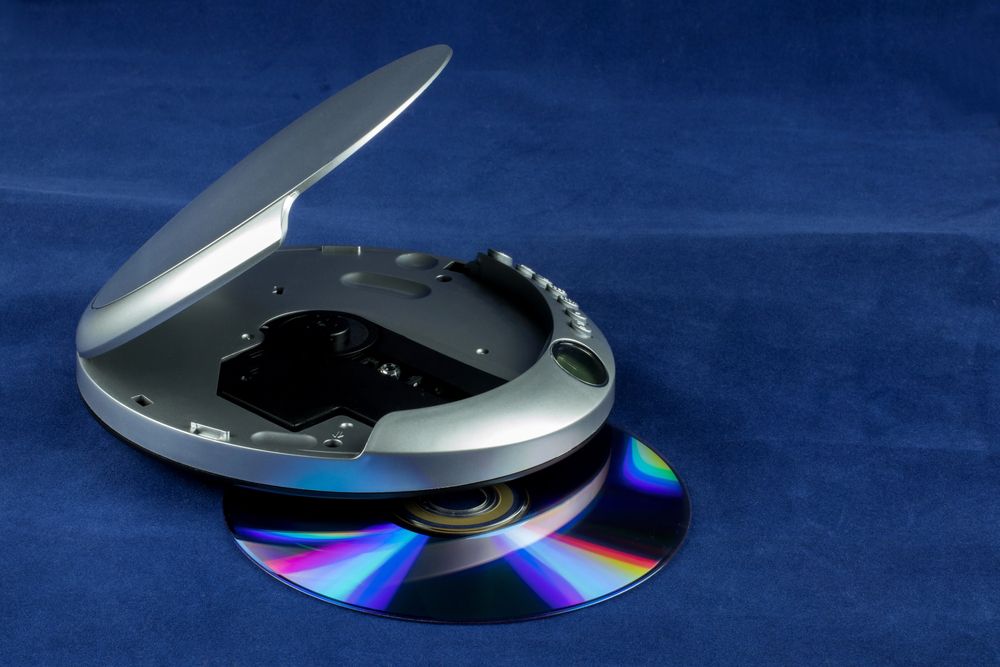
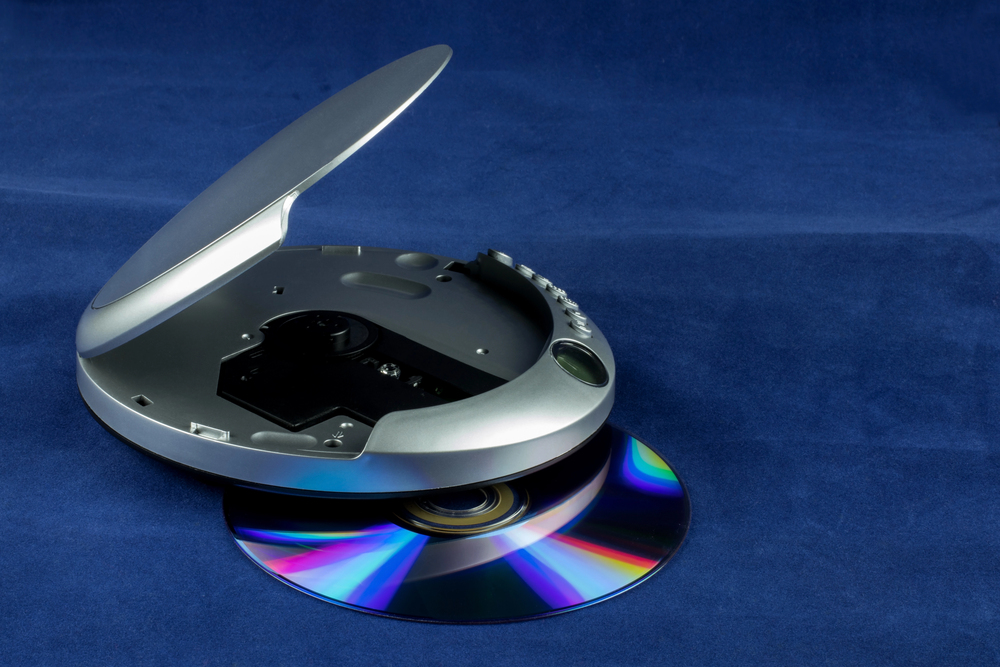
The original portable CD players of the 1990s and 2000s relied on disposable batteries, wired headphones and anti-skip systems that did not always survive a brisk walk. New models preserve the basic disc-shaped format while fixing several of those inconveniences.
The FiiO DM13, priced around $165, includes a rechargeable battery, Bluetooth, 3.5mm and balanced 4.4mm headphone outputs, plus the ability to copy CD tracks to a USB drive as WAV files. WAV is an uncompressed audio format that preserves the disc’s original data but uses more storage than MP3 or AAC.
Shanling’s EC Play costs about $199 and offers up to 12 hours of battery life. It supports wired headphones, coaxial digital output and Bluetooth codecs including AAC, SBC and LDAC. A codec controls how audio data travels wirelessly. LDAC can transmit more data than basic SBC when both the player and headphones support it, although Bluetooth still changes the original CD signal through compression.
Less expensive players are also available. The Syitren R300 has sold for around $80 to $95 and combines USB-C charging with Bluetooth and wired output. At this price, you may receive fewer connection options and less reliable Bluetooth compatibility with cars.
Which CD Player Specifications Should You Check?
Now, when it comes to actually purchasing a CD player, technical tables can make a simple purchase unnecessarily confusing. So, start with the features you will use: battery life, headphone outputs, Bluetooth support, anti-skip performance, and compatibility with burned CD-R or CD-RW discs.
Sound specifications can help you compare similar models, but several are frequently misunderstood. THD+N means total harmonic distortion plus noise. It measures unwanted sound added during playback. A lower percentage is better. Signal-to-noise ratio compares the music signal with background electronic noise. A higher figure is better, so 110 dB is preferable to 90 dB. Linearity measures how accurately the digital-to-analog converter handles changes in volume across the signal. Lower deviation from perfect linearity is preferable. Jitter refers to small timing errors in digital audio processing. Lower measured jitter is better, although most competently designed modern players keep it far below an obvious listening problem. Stop-band rejection describes how effectively a digital filter suppresses frequencies outside the intended audio range. A deeper negative figure, such as -120 dB rather than -60 dB, indicates stronger rejection.
These kinds of measurements, however, cannot tell you whether you will actually enjoy using the player. Build quality, button placement, disc noise and headphone compatibility may affect your daily use more than a minor difference in specifications. If you already own CDs, begin by checking whether an existing DVD player, game console or computer drive can play them. When you need a dedicated unit, choose the connections and portability you will actually use rather than paying for every available audio specification.
The renewed interest in CDs comes from a simple combination: physical ownership, affordable collecting and focused listening. Sliding a disc from its case, reading the liner notes and playing an album in order asks more of you than tapping a playlist. For some listeners, that small ritual is exactly why the format feels useful again.