Microsoft has spent more than five decades influencing how you work, browse and communicate. It employs more than 200,000 people and remains one of the world’s largest technology companies. A record that long also includes products the company would probably prefer you forget. The six below arrived with major funding, powerful partners and bold predictions. Each asked you to change how you used technology. Most failed because the benefit never justified the cost, inconvenience or learning curve.
The Microsoft Network Tried to Replace the Open Web
The Microsoft Network arrived with Windows 95 in August 1995. If you connected to the internet during that era, you may remember America Online, CompuServe and Prodigy. These services provided email, news and chat rooms inside controlled online environments.
Microsoft wanted its own version. MSN offered dial-up access and placed a direct link inside Windows 95, giving it access to millions of PC owners. Users increasingly preferred the open World Wide Web. Microsoft eventually moved MSN’s services online and closed the original proprietary network in 1998. The MSN name survived as a web portal, email brand and search service.
Microsoft Bob Turned Windows Into a Cartoon House
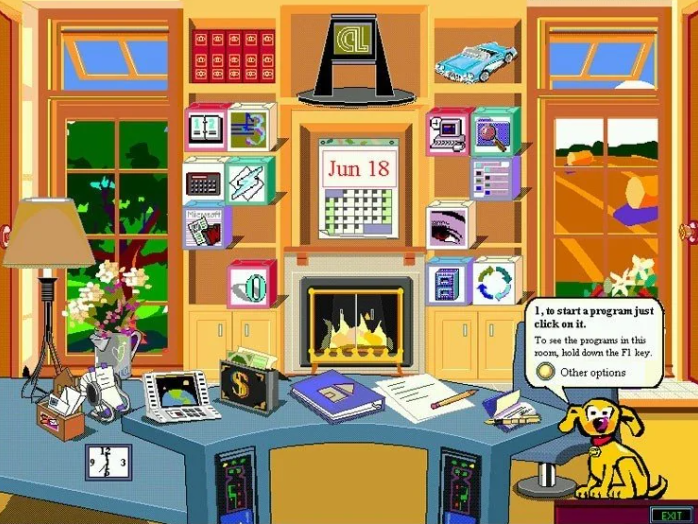
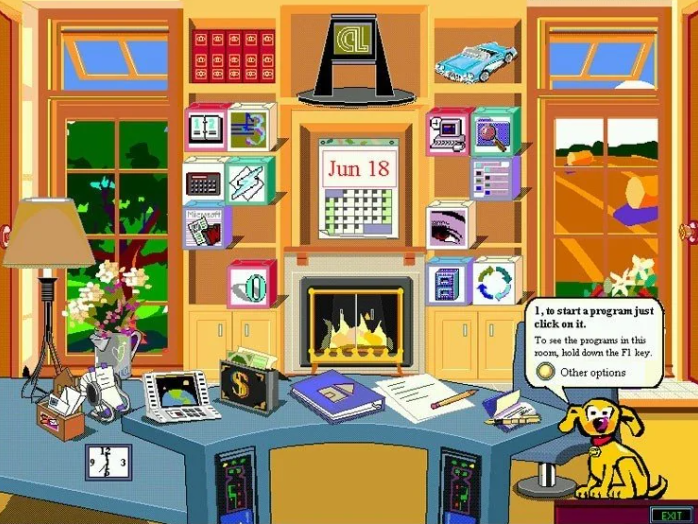
Released in 1995, Microsoft Bob replaced the Windows desktop with a cartoon house. You opened programs by selecting objects inside different rooms, while animated characters such as Rover offered instructions. Microsoft designed Bob for beginners who found menus and folders intimidating. Its visual interface occupied too much screen space, restricted what users could do and ran poorly on many affordable computers.
Bob disappeared within about a year and Rover later appeared in Windows XP, while Bob also inspired the creation of Comic Sans after designer Vincent Connare saw formal text inside a cartoon speech bubble.
Tablet PCs Were Too Heavy and Expensive
Microsoft experimented with tablets long before Surface. In the early 2000s, manufacturers including HP, Lenovo, Toshiba and Acer produced machines running Windows XP Tablet PC Edition. These computers supported handwriting recognition and digital pens, but most cost around $2,000 and weighed nearly as much as laptops. Standard Windows applications used small buttons and menus designed for a mouse, making them awkward to control with a stylus.
Bill Gates predicted in 2001 that the Tablet PC would become the most popular type of computer within five years. Consumer demand remained limited until Apple introduced the lighter, cheaper iPad in 2010. Microsoft applied some of those lessons to Surface in 2012, pairing a touchscreen with a detachable keyboard and software better suited to portable use.
UMPCs Put Desktop Windows on Tiny Screens
Microsoft also tried to shrink Windows into the Ultra-Mobile PC, or UMPC. Developed with Intel under the name ‘Project Origami’, these devices used screens smaller than 8 inches and ran full desktop Windows. Companies including Samsung, Asus, Sony and OQO released models with thumb keyboards, sliding screens and styluses. Microsoft predicted UMPCs would become “as indispensable and ubiquitous as mobile phones.” The hardware proved too small for desktop applications and too large to replace a phone. Battery life was limited, prices were high and typing remained uncomfortable. Microsoft stopped promoting the category around 2010.
Modern handheld gaming PCs such as the Steam Deck use a similar concept, supported by faster processors, better controls and software designed for smaller screens.
Zune Arrived After the iPod Had Already Won
Microsoft entered the portable music market in 2006 with the Zune, five years after the iPod.
The first model cost $249.99 and offered a 30GB hard drive, FM radio and Wi-Fi. You could send songs to another Zune owner, though shared tracks expired after three plays or three days. The feature depended on finding someone else with a Zune. Apple already had millions of iPod users, along with established accessories, car connections and the iTunes Store. Microsoft improved the hardware and later introduced the touchscreen Zune HD. Its Zune Pass subscription also anticipated the direction music streaming would take. Sales never approached the iPod, and the rise of smartphones weakened the market for standalone music players.
Microsoft ended Zune hardware production in 2011 and shut down its remaining download and streaming services in 2015. The device later became a running joke in the ‘Guardians of the Galaxy’ movies.
Cortana Never Found a Lasting Home
Microsoft introduced Cortana on Windows Phone in 2014 and named it after the AI character from the ‘Halo’ games.
You could use Cortana to search, send messages and set reminders. Microsoft eventually added it to Windows 10, Xbox, Edge, Teams, Skype, iOS and Android. Cortana never developed the reach of Siri, Alexa or Google Assistant. Windows Phone disappeared, and Microsoft failed to establish a major smart-speaker business where a voice assistant could become part of daily life. By 2019, CEO Satya Nadella no longer described Cortana as a direct rival to Alexa or Google Assistant. Microsoft gradually removed it from its products, and Copilot eventually replaced it as the company’s main AI service.
These products did not fail because Microsoft lacked engineers, money or distribution. They failed because users saw little reason to change.